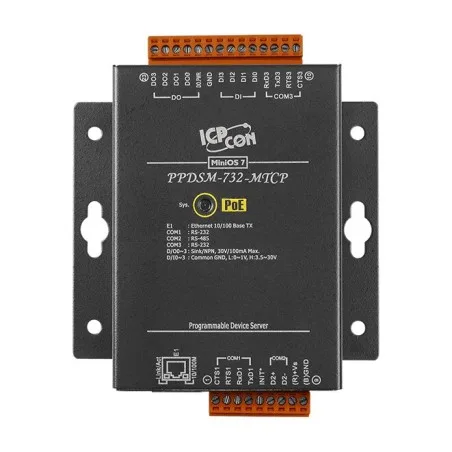
Item number PROGR-DEVIC-SERVE-RS-9

Programmable Device Server, RS-232 to Ethernet, DIN-Rail

CPU 80186-80MHz compatible
2 x 10/100 Ethernet RJ-45
1 x RS-232 serial port, 5-wire
Up to 115200 bps
Auto MDI/MDI-X, LED indicator
EEPROM 16KB, 40-year retention
512KB Flash, 512KB SRAM
Watchdog timer
Reverse polarity protection
12-48VDC power input
72 x 118 x 35 mm
-25 to +75C operating temp

191.62 €
Excl. VAT
Quantity
On the way in
file_download DOWNLOADS

Specifications

CPU 80186-80 MHz or compatible
Flash 512 KB
Installation DIN-Rail or Wall Mounting
Operating Temperature -25 ~ +75 °C
Watchdog Timer Yes
Status 1 x Power2 x Ethernet
Ports 10/100 Base-TX, RJ-45 port (Auto-negotiating, auto MDI/MDI-X, LED indicator)1 x 5-wire RS-232
Consumption 2.0 W
Dimensions (mm) 72 mm x 118 mm x 35 mm (W x H x D)
Storage Temperature -40 ~ +80 °C
Humidity 5 ~ 90% RH, Non-condensing
Reverse Polarity Protection Yes
Powered from Terminal Block 12 VDC ~ +48 VDC (non-regulated)
Baud Rate 115200 bps Max.
Parity None, Even, Odd
Data Bit 7, 8: for COM1
Stop Bit 1: for COM1
Casing Plastic
EEPROM 16 KB; Data return: 40 years.
SRAM 512 KB
Bias Resistor Yes, 1 KΩ
Node Address 254 (max.)

Programmable Device Server

The programmable device server converts serial RS-232 signals to Ethernet, allowing industrial equipment to communicate over a TCP/IP network. It is designed for reliable operation in demanding industrial environments and supports flexible programming for custom applications.


80186-80MHz CPU · RS-232 Serial Port · 2x 10/100 Ethernet · 12-48VDC Power Input


Key Features and Benefits

  • Dual Ethernet Ports - enables network redundancy or daisy-chaining
  • 115200 bps Serial Speed - fast and stable data transfer
  • Reverse Polarity Protection - protects against wiring errors
  • Watchdog Timer - ensures automatic recovery from faults
  • Wide Operating Temperature - -25 to +75C for harsh environments


Typical Applications

The device server is well suited for connecting legacy serial equipment to modern Ethernet networks in industrial settings.

  • Factory automation systems
  • Remote monitoring and control
  • Building management systems
  • Utility and infrastructure networks


A robust and flexible choice for bridging serial devices to Ethernet networks.