Item number CAN-FIBER-CONVE-MULTI

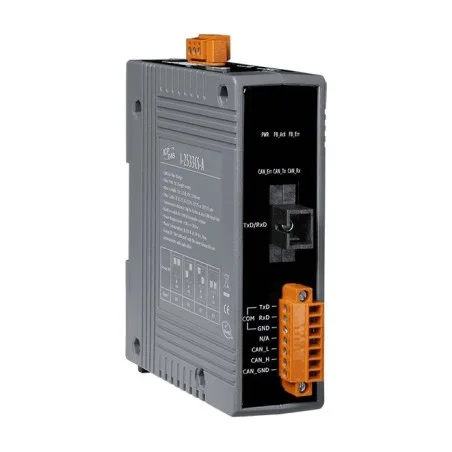
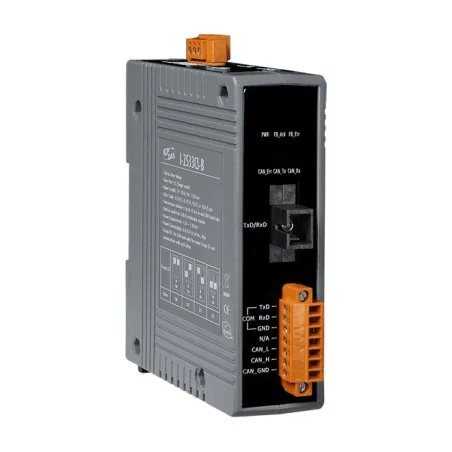
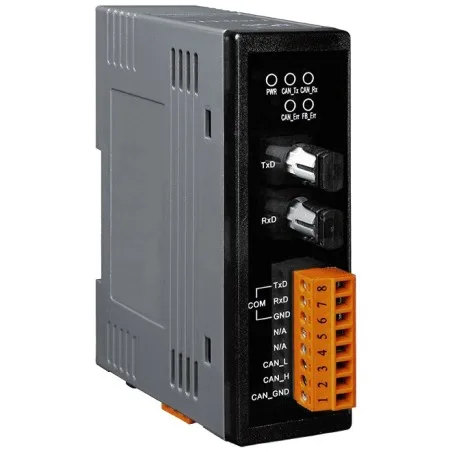
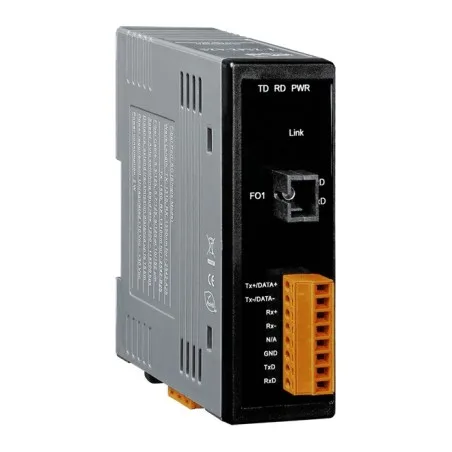
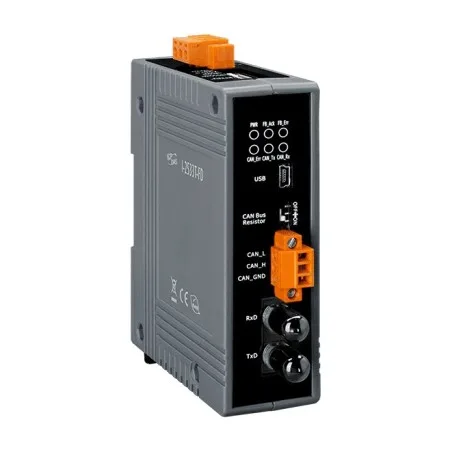
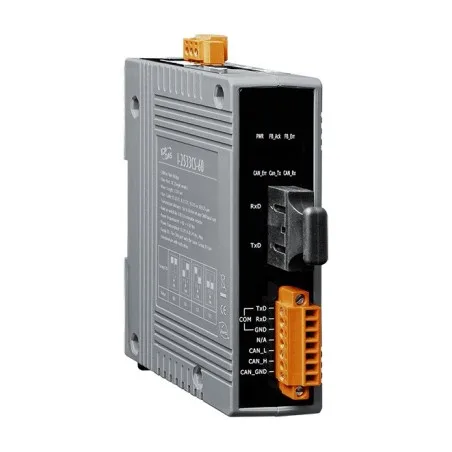
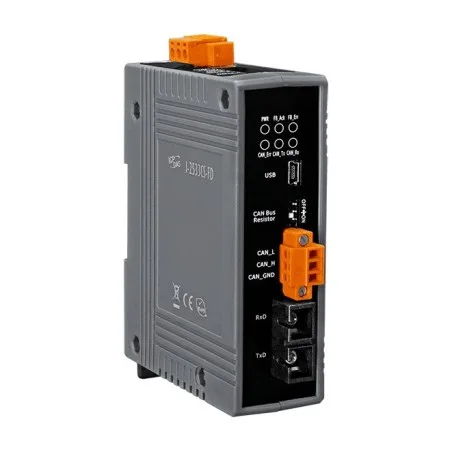
CAN to Fiber Converter, Multi Mode ST, 1-Port CAN, DIN-Rail

1 x CAN port, ISO-11898-2
CAN 2.0A and CAN 2.0B
Baud rate 10k - 1Mbps
1 x Multi Mode fiber, ST connector
Wavelength 850 nm
Distance up to 2 km
Isolation 3000VDC / 2500Vrms
Switchable 120 Ohm terminal resistor
1 x RS-232 utility port
DIN-Rail plastic casing
10-30VDC, 3W
32.3 x 77.5 x 99.0 mm
-25 to 75C (special components required)

294.80 €
Excl. VAT
Quantity
On the way in
file_download DOWNLOADS

Specifications

Installation DIN-Rail
Isolation 3000 VDC for DC-to-DC, 2500 Vrms for photo-couple
Operating Temperature 25 ~ +75 °C
Terminal Resistor Switch for 120Ω terminal resistor
Status 1 x Power3 x CAN status1 x Fiber
Ports 1 x RS-232 (Utility Port)1Multi Mode; ST connector x 1
Input Range +10 VDC ~ +30 VDC
Consumption 3 W
Dimensions (mm) 32.3 x 77.5 x 99.0 (W x L x H)
Storage Temperature 30 ~ +80 °C
Humidity 10 ~ 90% RH, Non-condensing
Specification ISO-11898-2, CAN 2.0A and CAN 2.0B
Baud Rate 10 k ~ 1 M bps
Casing Plastic
Filter Yes
Fiber Cable 50/125, 62.5/125 or 100/140 μm (62.5/125μm is recommended)
Wavelength 850 nm
Transmission Distance 2 km max (62.5 / 125 μm recommended)
Propagation Delay 250 us (*Note1)

Fiber Optics Converter Module

This fiber optics converter module converts CAN signals for fiber optic transmission and is used to connect CAN-based systems over long distances with galvanic isolation. It is well suited for industrial environments requiring noise immunity and reliable data transfer.


1 x CAN port (ISO-11898-2) · Multi Mode fiber, ST connector · 3000VDC isolation · DIN-Rail mounting


Features and Capabilities

  • CAN 2.0A/2.0B support - compatible with common CAN protocols
  • Fiber optic transmission - up to 2 km range via Multi Mode fiber
  • Galvanic isolation - 3000VDC DC-to-DC and 2500Vrms photo-couple isolation
  • Switchable 120Ω termination - easy adaptation to the CAN network
  • Wide operating temperature - reliable operation from -25°C to 75°C


Applications

The module fits industrial applications where CAN signals need to be transmitted over long distances or in electrically noisy environments.

  • Industrial automation
  • Machine control with CAN bus
  • Remote monitoring of CAN networks
  • Environments with high electrical interference


A robust solution for reliable CAN-to-fiber conversion in demanding industrial environments.