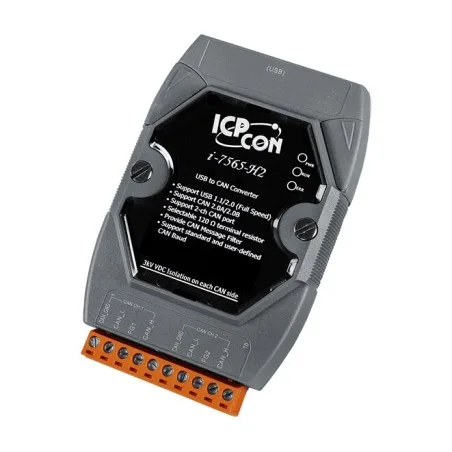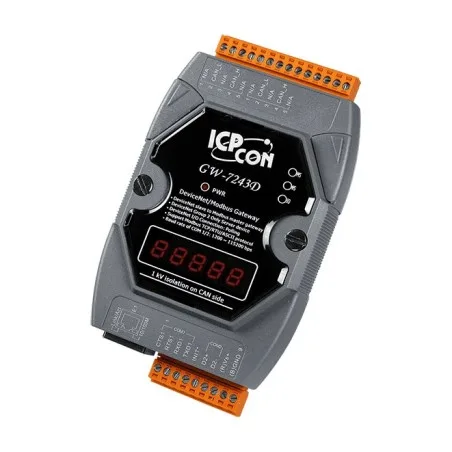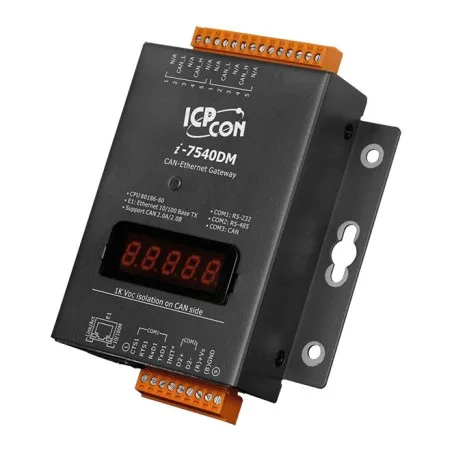
Item number RS-232-RS-485-4

RS-232/RS-485 to CAN Converter, Isolated, DIN-Rail

NXP SJA1000T CAN controller, 16MHz
RS-232 & RS-485 to CAN conversion
CAN 2.0A/2.0B, ISO-11898-2
1 x RJ-45 10/100Base-T(X) port
CAN baud rate 10k - 1M bps
Isolation 1000VDC / 2500Vrms
120 Ohm terminal resistor jumper
DIN-rail mount, metal housing
-25~75C (special components required)
10-30VDC input, 2.5W
72 x 122 x 33 mm

460.96 €
Excl. VAT
Quantity
On the way in
file_download DOWNLOADS

Specifications

Controller NXP SJA1000T with 16 MHz clock
Installation DIN-Rail
Isolation 1000 VDC for DC-to-DC, 2500 Vrms for photo-coupler
Operating Temperature -25 ~ +75 °C
Terminal Resistor Jumper for 120 Ω terminal resistor
Status 1 x Power
Ports 1 x RJ-45, 10/100Base-T(X)11 x RS-2321 x RS-485 (self-turner ASIC inside)
Input Range +10 VDC ~ +30 VDC
Consumption 2.5 W
Dimensions (mm) 72 x 122 x 33 (W x L x H)
Storage Temperature -30 ~ +80 °C
Humidity 10 ~ 90% RH, Non-condensing
Specification ISO-11898-2, CAN 2.0A and CAN 2.0B
Baud Rate 10 k ~ 1 M bps110, 150, 300, 600, 1200, 2400, 4800, 9600, 19200, 38400, 57600, 115200
Parity None, Even, Odd
Data Bit 7, 8
Stop Bit 1
Casing Metal
Filter Yes

RS-232/RS-485 to CAN Converter

This RS-232/RS-485 to CAN converter module bridges serial devices with CAN bus networks, enabling reliable data exchange in industrial automation systems. It provides galvanic isolation and a compact DIN-rail housing for robust deployment in control cabinets.


NXP SJA1000T CAN Controller · 1000VDC / 2500Vrms Isolation · DIN-Rail Mounting · -25 to +75C Operation


Key Features

  • CAN 2.0A/2.0B Support - compatible with ISO-11898-2 CAN bus standards
  • Galvanic Isolation - protects connected equipment from voltage spikes
  • Adjustable Baud Rate - CAN speeds from 10k up to 1M bps
  • Built-in Terminal Resistor - jumper-selectable 120 Ohm termination
  • Wide Operating Range - rated from -25C to +75C for harsh environments


Typical Applications

The converter is suited for industrial environments where serial devices need to communicate over a CAN network.

  • Factory automation control systems
  • Building management networks
  • Vehicle and transportation systems
  • Remote monitoring installations


A reliable, isolated link between serial and CAN networks for demanding industrial installations.