


Military operations place significantly higher demands on IT equipment than standard commercial environments. A rugged tablet for military use must operate in extreme temperatures, withstand vibration and shock, and deliver stable communication under critical conditions.
Both Android tablets and Windows tablets are used today in defense applications, vehicles, field operations, and command centers. The choice typically depends on software requirements, integration needs, and security demands.
What Characterizes a Military Rugged Tablet?
A tablet designed for military use must often document its robustness through standards and specifications that match tactical environments and mobile installations:
- MIL-STD-810H (vibration, shock, temperature, humidity)
- MIL-STD-461G (EMI/EMC protection)
- IP65 or IP66 rating
- Operating temperature typically from -20°C to +60°C (or lower)
- Sunlight-readable display (approx. 700–1200 nits)
- 5G / LTE communication with Dual SIM capability
- GPS and positioning
- Physical ports such as RJ45, USB, and often RS232/RS485
- 9–36V or 9–60V DC input for vehicle installations
In military vehicles, features such as ignition sense, delay on/off, UPS backup battery, and vehicle power protection (e.g., ISO 7637-2) are often critical for stable operation.
Windows Tablets for Military Use
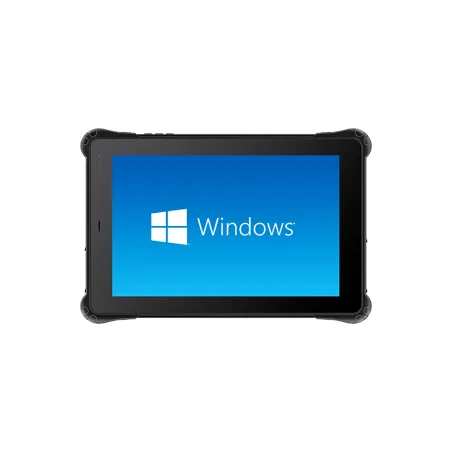
Windows rugged tablets are often used when compatibility with existing systems, advanced network integration, or specialized software is required. Typical applications include command and control, logistics, maintenance, GIS, and map-based systems.
Advantages of Windows Tablets
- High compatibility with existing IT and OT environments
- Support for Windows 10 IoT Enterprise or Windows 11 Pro
- Strong support for legacy interfaces and advanced drivers
- High performance (Intel Core platforms), PCIe SSD, and modern connectivity
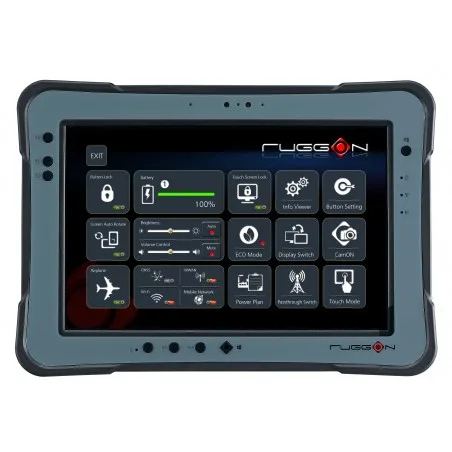
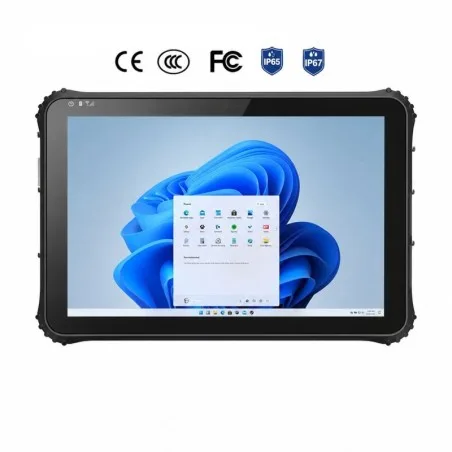
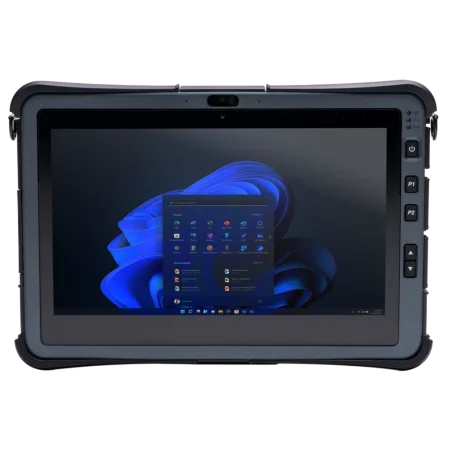
Example of a Relevant Windows Configuration
- 11.6" FHD (1920 x 1080) display
- 1000 nits brightness
- Intel Core i5 (e.g., 12th Gen)
- 512GB PCIe SSD
- 5G (Nano SIM), Wi-Fi 6E, Bluetooth 5.x
- RJ45 Gigabit Ethernet
- IP66 and MIL-STD-810H / MIL-STD-461G
- Operating temperature: approx. -20°C to +60°C
Android Tablets in Military and Tactical Environments
Android rugged tablets are often used in mobile and tactical solutions where fast boot time, lower power consumption, and app-based workflows are important. They are typically found in fleet management, vehicle installations, mobile data terminals, and lightweight field equipment.
Advantages of Android Tablets
- Fast startup and simple operation
- Lower power consumption in mobile setups
- Strong ecosystem for specialized apps and mobile workflows
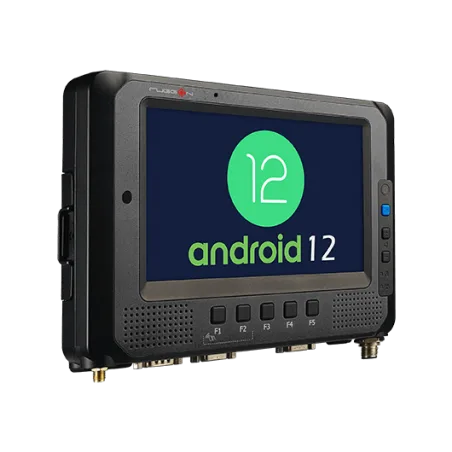
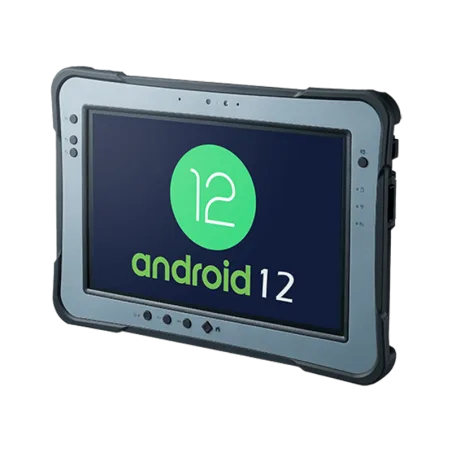
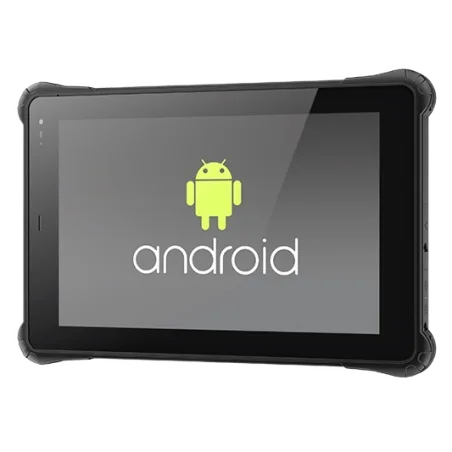
Example of a Military-Ready Android Configuration
- 7" display with Gorilla Glass
- Approx. 850 nits brightness
- Android 12
- Qualcomm Snapdragon (Octa-Core)
- IP65 and MIL-STD-810H
- RS232, USB, Micro SD, and Micro SIM
- Gigabit Ethernet (RJ45)
- 9–36V DC input and vehicle power protection (e.g., ISO 7637-2)
Vehicle-Mounted Tablets for Military Vehicles
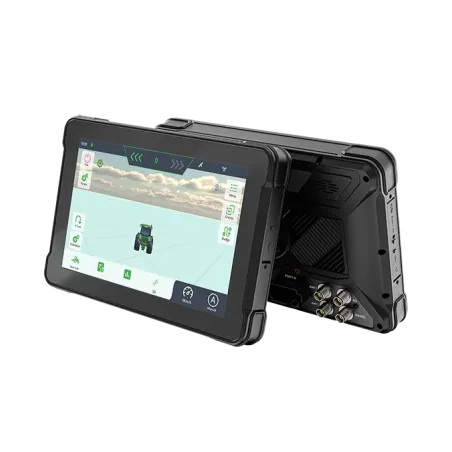
Military vehicles place specific demands on both mechanical robustness and power stability. Vehicle-mounted solutions typically require vibration tolerance, shock resistance, and protection against voltage spikes.
Typical Vehicle Requirements
- High vibration resistance during operation
- Shock resistance (e.g., 40G depending on platform and test method)
- Stable operation during voltage fluctuations
- Ignition sense with delay on/off
- DC input (e.g., 9–36V / 9–60V) and overvoltage protection
- VESA mounting options and docking connector
In these setups, ports such as CAN bus (e.g., SAE J1939), RS232/RS485, and Gigabit Ethernet are often relevant because equipment must integrate with vehicle systems and external devices.
Display Requirements in Military Operations
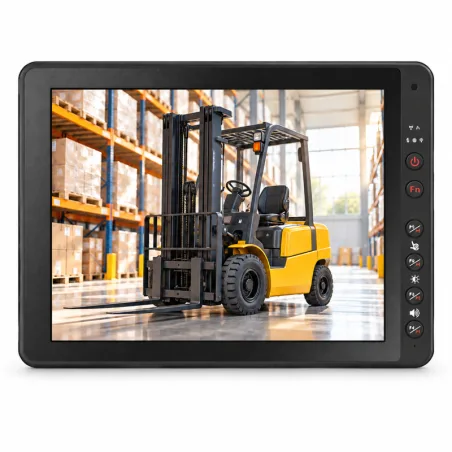
In the field, readability is critical. Therefore, tablets with high brightness and durable touchscreens are often selected.
- 700 nits or more for outdoor use
- 1000–1200 nits for direct sunlight and critical situations
- Anti-glare coating
- Resistive touch for use with gloves or wet hands
Security and Communication
Communication in military environments often requires multiple connectivity options and redundancy. Typical specifications include:
- 5G/LTE multi-carrier support
- Wi-Fi 6 / Wi-Fi 6E
- Bluetooth 5.x
- GPS
- Support for secure boot and encryption depending on platform
Windows is often chosen where heavy integration and application compatibility are required, while Android is frequently selected for lightweight, mobile, and app-driven workflows.
When Should You Choose Android vs. Windows?
| Requirement | Android Tablet | Windows Tablet |
|---|---|---|
| Low power consumption | Yes | Often no |
| App-based workflows | Yes | Possible |
| Heavy specialized software and drivers | Limited | Yes |
| Serial interfaces (RS232/RS485) | Some models | Yes |
| Advanced network integration | Possible | Yes |
| Lightweight field equipment | Yes | Depends on model |
Conclusion
Android and Windows rugged tablets play a central role in modern military and tactical environments. The choice depends on performance requirements, integration, power supply, and communication needs.
A MIL-STD certified tablet with IP65 or IP66 rating, sunlight-readable display, and appropriate interfaces is essential in the field, especially in mobile and vehicle-mounted solutions.